In this, our last blog post of 2025, I wanted to share a few brief observations about what surprised me in 2025, and what to look for in 2026. But first, I’d like to say a big thanks to all of you – this time last year Grand Cru Direct was merely a dream Paul and I were kicking around, and 2025 was the year it came alive. Without your trust and partnership, none of that would have been possible, so thank you!
Below are a few of the trends I’ve noticed going through my 2025 notes, as well as some musings about buying wine in 2026.
The Total Democratization of Chardonnay
This is a trend that has crept into my tasting notes for a few years now, but 2025 was the year it became definitive for me. White Burgundy no longer has any special claim on world-class Chardonnay. I am a card-carrying Burgundy fanatic, so trust me when I say that the jury is now in on this point. Whether it’s the persistent Chardonnays of Gary Farr in Australia’s Moorabool Valley, the wonderful balance of Kumeu River in New Zealand, or the incredible concentration of Ken Pahlow’s Walter Scott in Oregon, you can no longer say of the great Chardonnays of the New World that they are simply “great values” or “Burgundy alternatives”. They have become wines unto themselves, no longer overshadowed by the specter of the Côte de Beaune. The fact that they cost a tiny fraction of what you would pay for Leflaive, Lafon, or d’Auvenay is no longer the defining factor of the comparison, but of course it doesn’t hurt, either.
The outlook for 2026: A good old fashioned blind tasting à la The Judgement of Paris is in order, with a new crop of New World Chardonnays. My intuition is that even the most sought-after Burgundy bottles would find their match in the rising stars of the rest of the world.
Beaujolais is Back
I have had a love-hate relationship with Beaujolais. The phenomenal value of Cru Beaujolais in the early-to-mid-2010s ignited a passion that was dashed by an unconscionable number of flawed bottles in the late 2010s and early 2020s. The natural wine movement kicked off by a few ambitious Cru producers had “jumped the shark”, as they say. Much of the Beaujolais I tasted this year, however, pointed in a new, encouraging direction, away from the hype of the “zero-zero” micro-producer and back towards a balanced approach to winemaking. It seems Beaujolais is back – back where the finished product has been restored to a position of higher importance than the inputs (or lack thereof).
The outlook for 2026: Look for some incredible value in both Cru and village Beaujolais – the overall quality of winemaking has improved dramatically.
The Importance of Being Early
Oscar Wilde’s 1895 play was a light-hearted critique of Victorian society’s obsession with appearances, and I have just about the same attitude towards the Instagram culture of today’s fine wine crowd. When the collecting world has become an elbowing match for the same few bottles of eye-wateringly expensive Burgundy, there is sure to be value where no one is looking (or flex-posting, as the case may be). This year saw many of my perennial favorites soar into the pricing stratosphere (Cedric Bouchard’s Roses de Jeanne, for one, and Montevertine’s Le Pergole Torte for another – both had already been climbing over the last few years, but added tragic numbers to their average costs in 2025), proof that there is incredible drinking to be done ahead of the curve. Some collectors make the mistake of believing that the “classics” are set in stone. They are not. There are new ones minted every year, and if your cellar is already full of them, you’ll be smiling twice with every sip.
The outlook for 2026: More recommendations by yours truly to stock your cellar ahead of the curve.
Early to the Comeback
Finding the new sub-sub-sub-zone of an esoteric Eastern European wine region isn’t the only way to be early to a great new wine. One thing that came up repeatedly this year was being early to the second rise of an old style of wine that has simply gone out of fashion with the in-crowd. Older Bordeaux is one of the easiest examples, with Châteaux like Saint-Julien’s Gruaud Larose notching several top marks in my notes while older vintages languish on the market, priced well under their real value. Syrah, both in France’s Northern Rhône and in Australia, is another example of a once-lauded grape that now wastes away, far from the madding crowd. The savvy collector can use these shifts in popularity to good advantage.
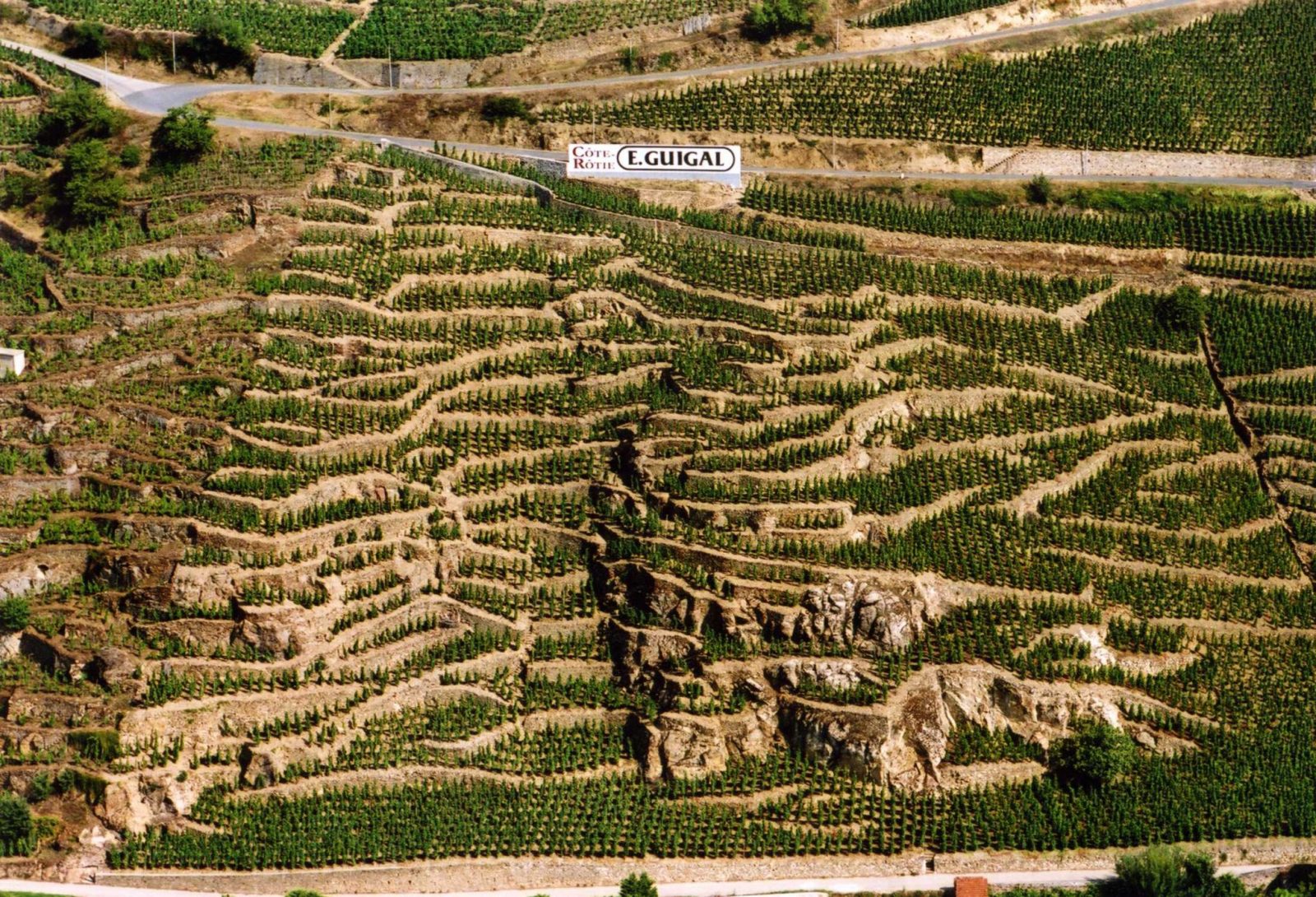
The outlook for 2026: Perhaps it’s too early to proclaim the triumphant return of Port or Madeira, but look for comebacks within regions that have been outside the Instagram oeuvre, like Côte-Rôtie.
Despite the doomsaying of the media, the shadow of tariffs, and the threat of catastrophic climate shifts, 2025 has been a year full of benchmark wines, both new releases and cellar finds. We look forward to sharing more bottles with you in 2026. Cheers!