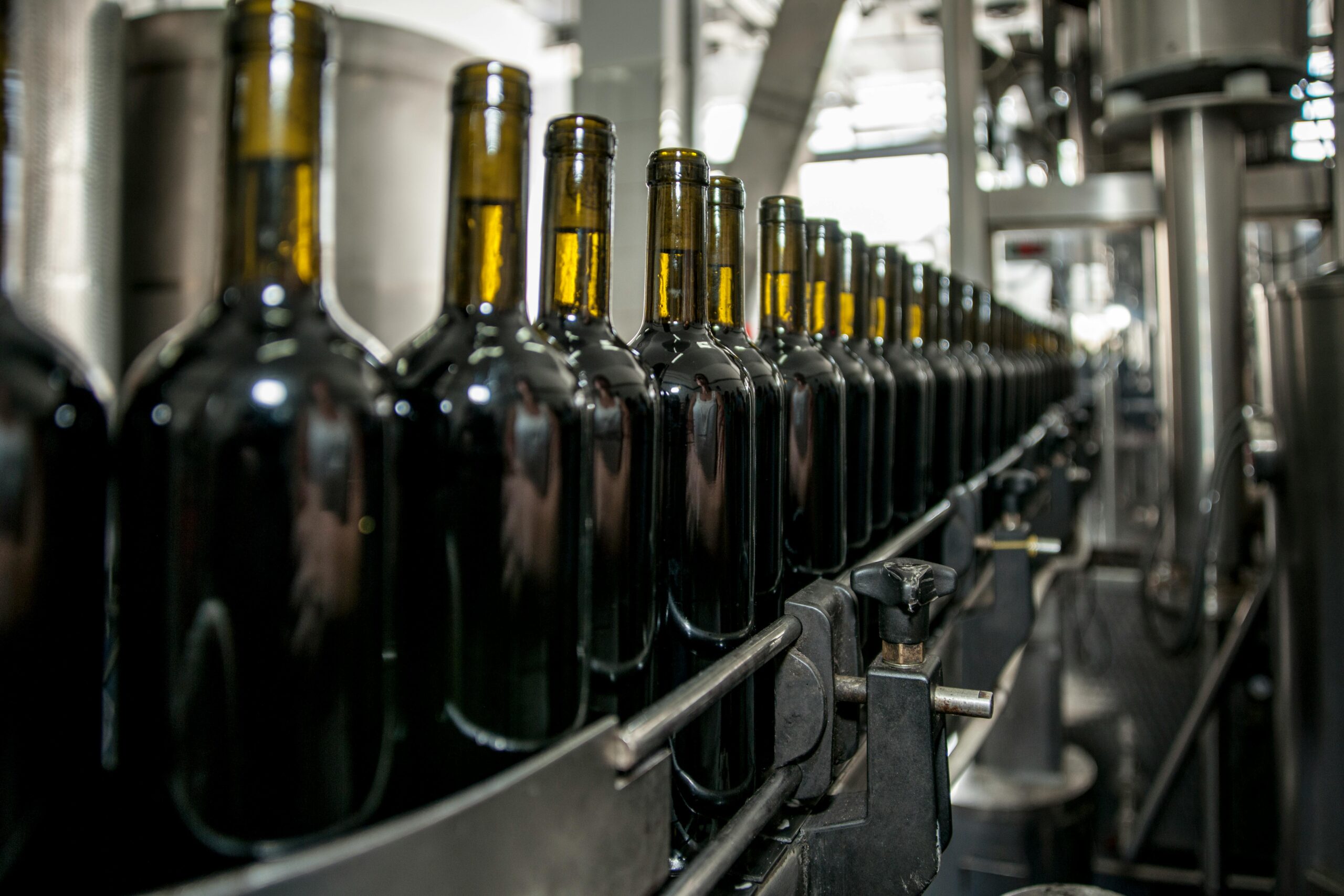
Consistency is a tricky word when it comes to wine. On one hand, wine is a food product, and most food products are expected to taste precisely the same as long as they are consumed within a prescribed window of time. On the other hand, wine is uniquely shaped by the vintage in which it is grown, and though it is not marked with a “best by” date, it is well established that certain regions and certain wines tend to last far longer in the cellar than others.
On top of vintage variation there is immense producer variation, not only in the styles they create vintage after vintage, but in how well they farm the vines, how much they intervene in the vineyard and cellar, and the time, care, and money they put into careful bottling and preservation of the finished product. Even the choice of closure is a testament to a producer’s dedication (or lack thereof) to consistency.
A certain mystique has settled on producers (who will remain nameless) whose wines are extremely variable – when they are “on” they deliver life-changing drinking experiences, but only one in four or even five bottles delivers. Maybe that inconsistency is just another facet of the collector’s hunt, or maybe it is a slap in the face to a paying customer. We’ll leave that battle for another day. Today we are highlighting five producers so consistent they just can’t seem to make a bad wine. Young bottle or old, pristine or battle-worn, “good” vintage or “bad”, these producers always seem to pull off a miracle. Some have prices to match and some continue to languish in relative obscurity, but when I see any one of these names on a restaurant list or retailer offering, I order with confidence.
Emmerich Knoll III is an energetic, obsessive farmer and winemaker, shepherding 15 ha of prime vineyard land in the Wachau (plus a legendary parcel of Pfaffenberg in next-door Kremstal). The estate is focused on Grüner Veltliner and Riesling, but even the rarities like Gelber Muskateller provide pure pleasure in the glass. Emmerich is one of the few producers crazy dedicated enough to produce late-harvest versions of both key grape varieties, including TBA wines to rival the greatest from Germany.
Knoll’s wines age gracefully for decades (many decades in the case of the TBAs), and across the entire spectrum of ripeness, the operative word is delicious. There is almost nowhere else in the world where one can get wine of this caliber for this price. Sure, some of the rarer bottles like the Vinothekfüllung (a blend of the best rows/plants from across the top few vineyard sites) have started to creep up into “collector” territory, but the Smaragd bottlings of the top vineyards (Kreutles, Kellerberg, Loibenberg, Pfaffenberg) are still ludicrously affordable. Pick a vintage – any vintage – and drink now or hold as long as your patience allows.
There is an undeserved strain of disdain for the Super Tuscans among today’s sommelier set. Perhaps the rebel of one generation becomes the establishment against which to rebel in the next. And sure, there are certain producers for whom disdain may be warranted. But going through my notes on Tenuta San Guido (and particularly the flagship Sassicaia) over the last few years produces an almost perfect picture of consistency. And not – before the sommelier set doth protest – a sterile consistency achieved by over-manipulation to the point of homogeneity, but a true, vintage-honoring consistency.
Mario Incisa della Rocchetta patiently honed his craft for over 20 years prior to the first commercialized vintage of Sassicaia (1968), so perhaps it should come as no surprise, but this is one relentlessly hyped producer for whom the hype seems solidly deserved. Surprisingly approachable in youth, a steady soldier in the cellar, and relatively impervious to the worst elements of vintage variation, Sassicaia deserves its spot at the top of the Super Tuscan hierarchy.
While the white wine at this address is of interest, and certainly of admirable quality, it is the red that places them firmly among the legends of consistency. In his 2002 book “Vintage Wine”, Michael Broadbent dedicates an entire chapter to this obscure domaine, an honor afforded to only three wineries in all (one other of which features in this article). My own notes do not stretch as far back as Broadbent’s, who followed the domaine from its infancy, but I have recent notes all the way back to 1989 without a bad one in the bunch.
Mas de Daumas Gassac is another member of this list that still represents outrageous value for collectors. Current releases can be had for a pittance and only need five years or so in the cellar to begin to show beautifully (my most recent note is on the 2020 vintage, which was already impressive, and had at least a decade left in the tank). I can only conclude that many global wine buyers rely too much on famous regional names rather than their taste buds, or this producer’s wines would be far more expensive.
Spain has a few contenders for this list, but after consulting all my recent notes on each, Vega Sicilia has to be given the crown. This historic Spanish estate was also given its own chapter in “Vintage Wine”, but their inclusion here stems less from that and more from a recent vertical dinner which featured a whopping 35 vintages of their top wine – Único. To create a merely innocuous wine with consistency for more than a century is difficult enough. To craft as many legends as Vega Sicilia has in that span of time is nearly miraculous.
Único is, certainly, less approachable in youth than the previous members of this list, but as long as you set your vintage clock back about two decades, you can’t go wrong. Next time you find yourself in Spain, hunt for a few older bottles kicking around restaurant cellars. You won’t be disappointed.
It’s probably unfair that the New World has only one of the five entries in this list. It isn’t their fault that since consistency is far more common among the ranks of the top new world wineries, it seems somehow less remarkable. There are at least half a dozen wineries in Northern California alone that deserve consideration – Corison, Diamond Creek, Dominus, Harlan, Heitz, and Mayacamas, just to name a few – but none is more consistent, in my estimation, than Ridge Vineyards.
Ridge rises to the top not only because of the legendary Monte Bello, which is itself one of the most consistent Cabernet Sauvignons in the US, but also their dedication to what was once a California staple: Zinfandel. In a region where price has become totally disconnected with reality, bottlings like Lytton Springs, Geyserville, and East Bench provide immense value without sacrificing an iota of authenticity.
—–
How important is consistency when you buy wine? Are you willing to wade through expensive disappointments in search of a mountaintop experience? Or do you stick to producers who deliver predictable quality under every cork? Drop us a line with your thoughts.