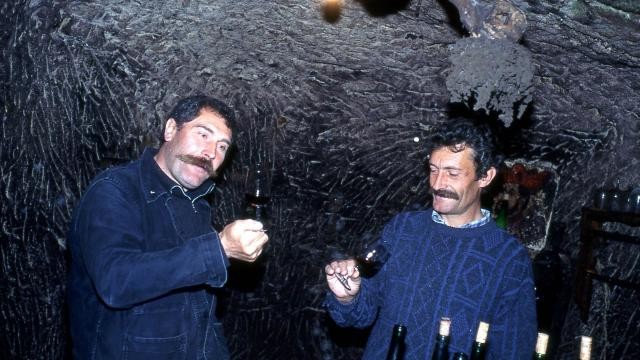
Last week we highlighted the top producers of white wine in the Loire Valley, one of France’s most underrated wine regions. The Loire’s red wines, from Pinot Noir, Cabernet Franc, and to a lesser extent Côt, Gamay, and Grolleau, are even less familiar to US collectors and provide excellent investment opportunities across a range of styles.
The Loire Valley is vast and intricate, dotted with small family producers worth exploring, so just like last week, this should be viewed as the minimum required dose of vinous spelunking – a mere taste of the cavernous expanse that is this vibrant and diverse region of production.
Rosé Wines
Like so many places across the globe, the Loire on the whole treats rosé production as an afterthought, making quaffable pinks with more pluck than polish. The most serious production is centered around Sancerre in the east and Anjou in the central Loire.
In Sancerre, many of the top producers make excellent rosé from Pinot Noir, including Domaine Vacheron and Pascal Cotat. François Cotat’s Chavignol Rosé is especially worth seeking out, though it is both rare and pricey for the category.
Farther west, Guiberteau and Thibaud Boudignon, who both featured in our discussion of Chenin Blanc last week, make lovely examples of Cabernet Franc-based rosé. Guiberteau’s is slightly statelier, while Boudignon’s rosé is a perfect summertime house wine – inexpensive and full of personality.
Red Wines
Sancerre
Pinot Noir is the grape of choice for red wines in the eastern Loire Valley, and many Sancerre producers treat their red wine programs much like they do their rosé, which is to say they make a single red wine as a sort of curiosity to show alongside their multiple, often single-vineyard whites. Alphonse Mellot and Domaine Vacheron are notable exceptions, with single-parcel offerings that show the vast possibilities for Pinot Noir in the region. Mellot’s La Moussière and Vacheron’s Belle Dame are both worth making a special effort to track down and can age gracefully for over a decade. Claude Riffault’s Sancerre Rouge La Noue is another striking exception to the all-too-common refrain: “Oh, and also we make a red wine.”
Touraine
Heading west to Touraine, a wider selection of red varieties is being made into wines that range from bright and lively to serious and age-worthy. Yes, Cabernet Franc is king in the western Touraine villages of Chinon, Bourgueil, and Saint-Nicolas de Bourgueil, but in the more general appellation you’ll find Côt (the local name for Malbec), Grolleau, and Gamay in many blends. Lionel Gousseaume and Coralie & Damien Delecheneau at La Grange Tiphaine make excellent red wines from Côt, Gamay, Grolleau, and Cabernet Franc alongside their serious Sauvignon Blancs.
In Chinon, production is split between more modern producers like Philippe Alliet who utilize significant portions of new oak in the raising of their Cabernet Franc, and strict traditionalists like Olga Raffault and Charles Joguet, who use large, older barrels for aging. Bernard Baudry is an up-and-comer worth watching. Though the Domaine has been active since the mid-1970s, Matthieu has made considerable strides both in quality and distribution since the mid-2000s. Some of the top Chinon producers (Raffault and Joguet, in particular) hold back a significant portion of their production for library releases, which are worth keeping a watch for. Jerôme Lenoir is an extreme example of this tendency – vintages back to the legendary 1989 of his Chinon Les Roches can sometimes be found on the market. Neighboring Bourgueil’s Les Perrières bottling from Catherine and Pierre Breton is required drinking for anyone trying to discover the depth and ageability of Loire Valley Cabernet Franc.
Anjou-Saumur
Moving on to Anjou-Saumur, a single name dominates the collector landscape: Clos Rougeard. Charly and Nady Foucault created what are now unicorn wines from the legendary Poyeaux and Le Bourg parcels until Charly’s death in 2015. Some would even say they are the best Cabernet Franc wines ever produced. Nady, who was more involved in the business side, oversaw the sale of the Domaine two years later, ending the eight-generation-long family tradition. The winery is now owned by the Bouygues family, a Parisian engineering, construction, and telecom dynasty, who have done an admirable job assembling a team to continue the Foucault brothers’ legacy. Charly’s son Antoine continues his father’s winemaking tradition at the nearby Domaine du Collier.
Outside of Clos Rougeard, whose wines can be challenging to source and whose price tags can be panic-inducing, Domaine Guiberteau, Antoine Sanzay, and Thierry Germain (Domaine des Roches Neuves) are all making exceptional red wines from the region, which are worthy of more attention and extended cellar age. Those of a natural persuasion should also seek out Mark Angeli’s (Ferme de la Sansonnière) rare Les Gélinettes, a blend of Grolleau, Cabernet Sauvignon, and Gamay.
Overall, the red wines of the Loire Valley can be summed up by their lively acidity, herbal character (particularly in western Touraine and all through Anjou-Saumur), and surprising longevity in the cellar. Outside of a single producer, they are also chronically underpriced, offering fertile hunting grounds for those collectors looking to expand their horizons and perhaps pick up a rising star before the rest of the wine-drinking world catches on.