As you are slowly coming out of your turkey-and-Grand-Cru-Burgundy-induced haze and fighting for your life under the weight of a hundred different Black Friday “sales”, we figured we’d do something a little different. We don’t really do sales at Grand Cru Direct. We figure it’s better to give you the absolute best price year-round. So if you share our ennui with the commercial firehose that today has become, I invite you to join in on a little game I play every year: the Small Cellar Project.
At the end of every year I build three imaginary cellars. The cellars exist solely in a spreadsheet, with the wines, quantities, vintages, and prices plotted in exacting detail, a monument to my own personal favorites of the year.
Those of you prone to inquisitiveness might be thinking, “Why on earth would you spend your time building imaginary cellars, let alone year after year?” Or perhaps you’re thinking about what you’ll crack open with dinner tonight. Either way, allow me to elucidate.
The Why
- “Oceania was at war with Eurasia: therefore Oceania had always been at war with Eurasia.” Orwell was describing the over-writing of the past in the context of a dystopian totalitarian state, but humans are quite adept at forgetting things without any help from an overreaching government. What was your favorite wine five years ago? Who did you feel was the best producer in Barolo or New Zealand? Who did you feel was producing wines with the most bang-for-buck value? While few would claim that their taste has remained static over time, we nonetheless live in a dualistic haze where we both know our preferences have evolved yet still imagine we have always been in possession of excellent taste. The building of imaginary cellars records one’s choices indelibly, allowing future review.
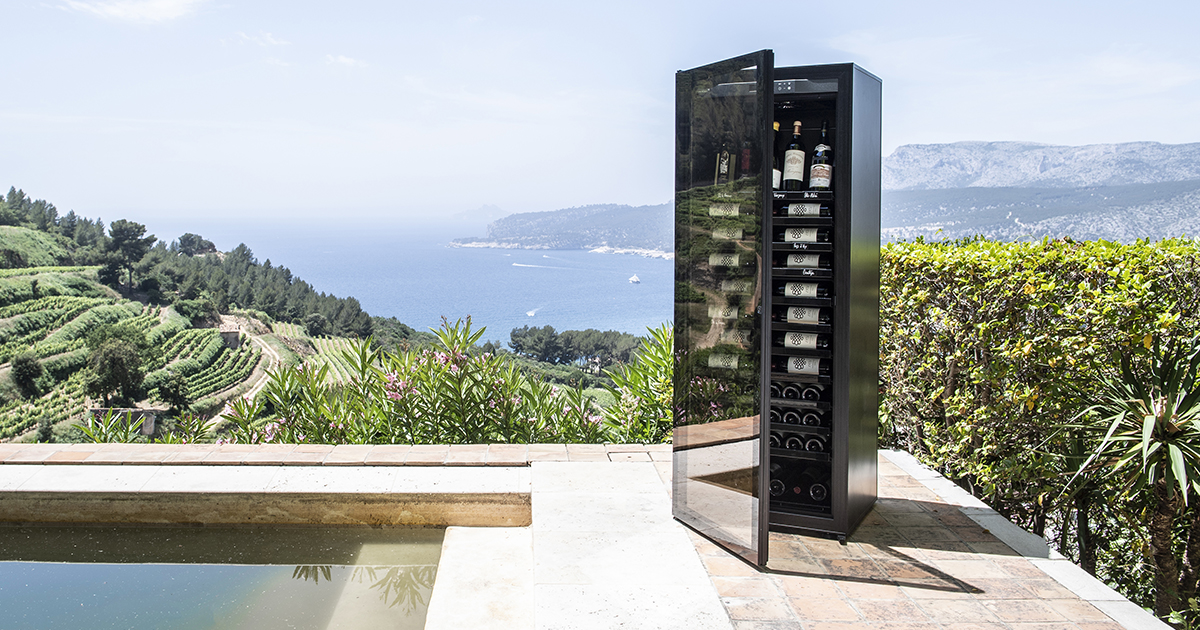
- “The enemy of art is the absence of limitations.” Perhaps it was Orson Welles who said this, as is often alleged. The provenance matters little when the content is so undeniable. The second reason for this project is that the cellars are small. A standard Eurocave Pure L like the one I’m staring at in my house right now supposedly holds 182 standard Bordeaux-shaped bottles, but there will be plenty of other-shaped bottles in the mix, so I’ve set the limit for each of these cellars at 150 bottles, which should realistically fit inside. That limit forces me to make difficult choices about which wines to include and which to cut, producing (hopefully) a truer picture of my opinions about the producers involved.
The How
The rules of this exercise are simple, and can be followed along with at home:
- I’ll assemble three imaginary cellars, with maximum budgets of $5000, $15,000, and $50,000 respectively, and each of exactly 150 bottles. 375ml and 1.5L bottles are acceptable, but I tend to stick with 750s outside of a few dessert wines
- I will be using pricing and pack sizes as of the published date of each section on GrandCruDirect.com. Those following along at home are welcome to use the pricing from any reputable retailer, but they must be real, current prices
- Pre-arrival and in-stock wines are allowed, but tariffs should be added to pre-arrivals where applicable (we’ll be using a flat 13% for simplicity) to keep things fair. Shipping and any local tax will be ignored
- Stylistic distribution of the cellar is limited only by the artistic conscience of the cellarmaster, but variety and food-pairing flexibility should be maximized
- All wines must actually have been tasted by the author, ideally within the last 12 months (no daydreaming about 1945 Romanée-Conti)
The Who
For years I have observed this tradition on my own, but now I invite you, my intrepid readers, to do so alongside me. You are by no means compelled to create three side-by-side cellars as I (in my masochism, no doubt) have committed to. But I assure you, it is both challenging and enlightening to choose one of the three budgets and create even a single imaginary cellar. Even one year will teach you something about how you view the project of wine collecting, and over time you can look back on your evolution as a collector with pride and (less than I imagined might be the case, but still occasionally) horror.
For those interested in creating their own cellar(s), you may create or download a copy of the following Google Sheet if you need a starting place: Small Cellars Project Template. Once you have a copy, make it your own! Name your categories, remove them, add new ones. Variety and individualism are the spices of life, and too often our real cellars look more alike than they ought.
Over the next three Fridays, I’ll be publishing the three versions of my 2025 Small Cellars. I’d love to hear about yours. Drop me a line at calvin@grandcrudirect.com.