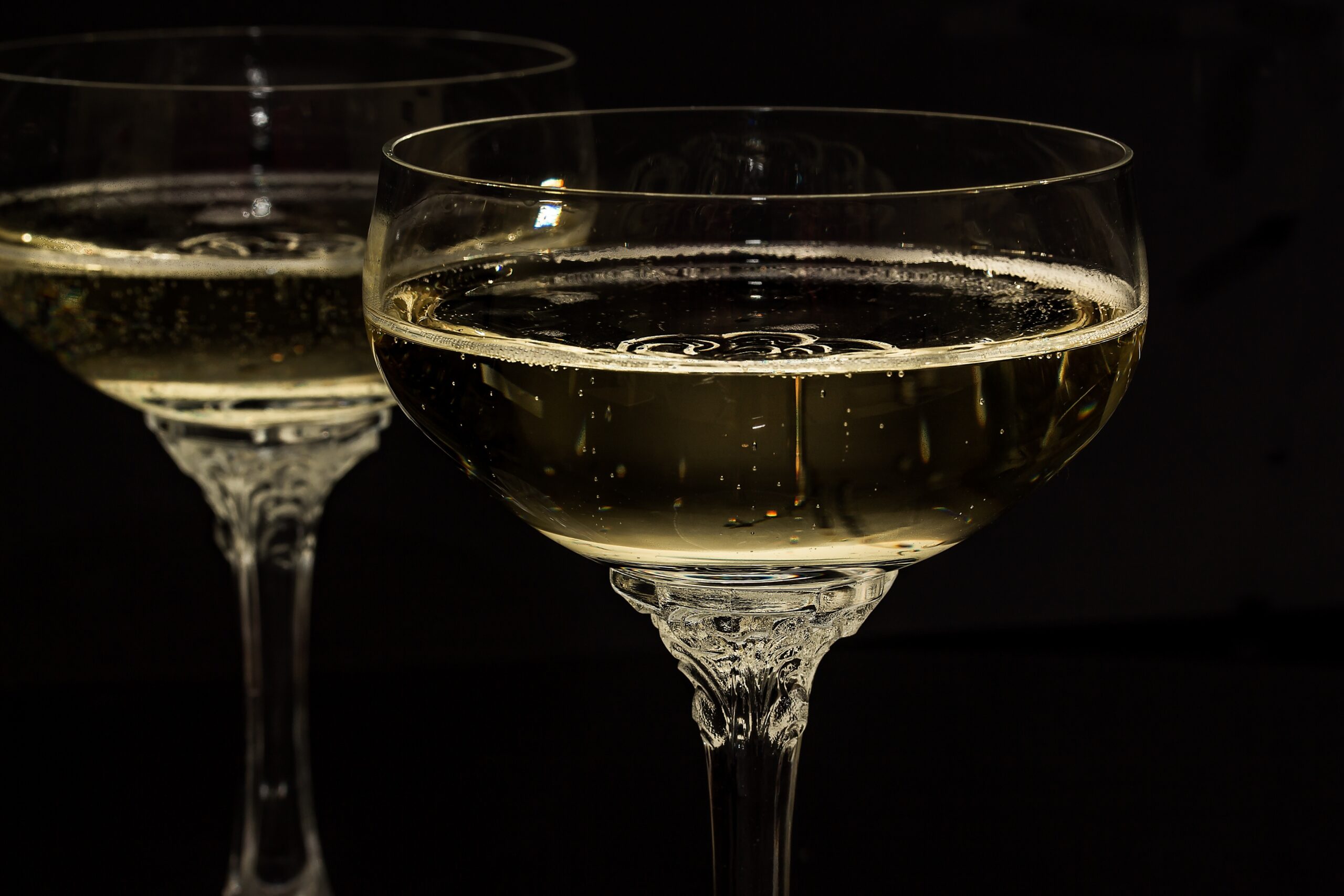
While enjoying a delicious glass of Krug Rosé 28ème Édition at a collector’s house recently, I was asked to rate my favorites among the Têtes de Cuvée of the large Champagne houses. The fact that I couldn’t do so readily gave me pause, as I dislike nothing more than being left speechless, particularly when someone has finally asked for my opinion rather than having it foisted upon them in print.
An effort such as this is bound to strike up some heated debate, and perhaps even make a few enemies, so one should bear in mind that the issue here is of relative quality. In other words, the least of these wines would still be preferable to a wallop over the head, and would-be sharpeners of pitchforks should perhaps point their implements towards those who extol the “virtues” of true abominations – might I suggest non-alcoholic “Champagne”.
The Contenders
For brevity, I have selected ten Têtes de Cuvée that are both readily available and non-redundant. A look at Wine-Searcher’s “The Most Wanted Champagnes of 2025” list yields a top ten where fully half of the spots are populated by two LVMH brands, Dom Pérignon (Vintage, P2, and Rosé) and Krug (Vintage and Clos du Mesnil). Such an arrangement may be delicious, but it lacks a certain spirit of competition.
In alphabetical order, the following wines will be considered (as a composite of all recent vintages/releases):
- Bollinger R.D. Extra Brut
- Dom Pérignon Brut
- Grand Siècle par Laurent-Perrier
- Krug Vintage Brut
- Louis Roederer Cristal Millésime Brut
- Perrier-Jouët Belle Époque Brut
- Pol Roger Cuvée Sir Winston Churchill Brut
- Salon Cuvée ‘S’ Le Mesnil Blanc de Blancs Brut
- Taittinger Comtes de Champagne Blanc de Blancs Brut
- Veuve Clicquot Ponsardin “La Grande Dame” Brut
There is some debate whether Bollinger R.D. or Bollinger La Grande Année is properly considered the Tête de Cuvée of the house but, as I love both similarly, it is a distinction without a difference for today’s purpose. Some may also protest that Krug Grande Cuvée is more in line with the price points being considered, but as I have included Salon, which now trades regularly in the four-digit world, Krug Vintage’s relative affordability is, if anything, a point in its favor.
The Ranking
#10: Perrier-Jouët Belle Époque Brut
Listen, someone had to be last. And obviously, this is not a bad wine, but it has never changed anyone’s life (read: it has never changed my life). Delicious, yes. Consistent, also yes. Enchanting? Undeniable? Irresistible? Unfortunately, not often enough. That’s the sandbox we’re playing in here.
#9: Veuve Clicquot Ponsardin “La Grande Dame” Brut
This one is an underdog. To rise from a wine like Yellow Label, which is basically the Michael Bay film of Champagnes, to a Tête de Cuvée that can be genuinely surprising and delightful is an admirable feat. It’s a feat that La Grande Dame regularly pulls off, but it’s not enough to compete with the rest of this list.
Before the meteoric rise of Burgundy prices, one might have hazarded this as the most overhyped wine in France. But these days there are four and even five-figure disappointments that deserve that title, so we’ll have to settle for a tepid eighth place finish. The occasional vintage of Dom can make one raise an eyebrow in surprise, almost prompting a re-evaluation of this brand (brand with a well-enunciated “b”, mind you). Almost, but not quite.
#7: Grand Siècle par Laurent-Perrier
The seventh spot gets us into the difficult part of this list. The only non-vintage cuvée in the running, Grand Siècle can be seriously good, and a few releases even rise to the top tier of legendary Champagnes. But there is a tendency for this bottling to come off sweeter than its listed dosage (I blame relatively high dosage levels combined with routine malolactic conversion), which pushes many of the editions just out of balance for my taste. When you get a good one, it can hang with the best. But that inconsistency knocks it down to 7th on my list.
#6: Taittinger Comtes de Champagne Blanc de Blancs Brut
If this were a ranking of value per dollar, Taittinger’s dependable Comtes de Champagne would surely come out on top. But even in a contest of total quality, it performs admirably. Expressive and balanced in top vintages and more challenging ones alike, this should be a cellar staple of any serious Champagne collector. There are wines on this list with more class and filigree, but, at least for my money, there aren’t any that deliver more dollar-for-dollar delight.
#5: Pol Roger Cuvée Sir Winston Churchill Brut
The fifth and fourth spots on this list are filled by wines that embody the more powerful side of Champagne – wines of unabashed presence and complexity. They are also both still family-owned and operated, a rarity among the large Champagne houses. While each delivers on the immense promise of the style, Sir Winston Churchill is just a touch less consistent and complex than my #4 pick. We’re really splitting hairs at this point, and I’d receive a glass of either wine with glee, but if we lined up three vintages of each side by side, my money would be on the Bolli.
Who says great Champagne has to be lean? R.D. is based on Bollinger’s La Grande Année bottling, but aged longer on the lees, then disgorged to order (R.D. stands for “recently disgorged”) to maximize freshness. The result is undeniable – an impossibly rich and complex wine that still manages to retain a mouthwatering freshness (helped by the Extra Brut dosage level – no more than 6 g/l, and often more like 3 or 4). When the powerful side of Champagne is the order of the day, this is the way to go.
#3: Louis Roederer Cristal Millésime Brut
Perhaps it’s the lack of malolactic conversion, but Cristal always feels more like a Blanc de Blancs than its true cépage (usually around 60% Pinot Noir and 40% Chardonnay) would suggest. Like my #2 wine below (though perhaps not so acutely), Cristal is a Tête de Cuvée that benefits immensely from additional cellar age before consumption. When opened in the proper window, these wines are incredible studies in balance – acidity, lees influence, slow oxidation, and intensity of fruit all play off one another beautifully, creating an addictive experience that keeps one coming back until they are staring at the bottom of an empty glass.
#2: Salon Cuvée ‘S’ Le Mesnil Blanc de Blancs Brut
The number two wine comes with an important caveat: do not open upon release. Salon’s Cuvée ‘S’ is about as good as it gets when it comes to vinous pleasures, but it needs at least half a decade in the cellar (preferably more like a decade) to relax. If you like spending the equivalent of five to six Comtes de Champagne bottles to lick razor blades, I have a bridge I’d like to sell you. But for the patient, well-aged Salon is a pinnacle experience in wine appreciation – that is, if you can stomach the price.
A perfect wine for every occasion. More poise than R.D., more power than Salon, more mystique than Cristal. As for value… well, let’s just say sometimes you get what you pay for. Lest I be accused of undue hate towards a certain multi-billion-dollar luxury conglomerate, I present to you (in my humble opinion) the greatest of the Têtes de Cuvée. Oak fermentation, a flexible approach to malolactic conversion, and incredibly expert blending all contribute to the supremacy of Krug, but the real proof is in the bottle. It’s everything a Champagne should be: irresistible, yes, but effortlessly and oh-so desirably so.
I’ve barricaded my inbox and prepared an alternate identity, so do your worst. Have I bestowed glory where it is undeserved? Or perhaps I’ve slighted your favorite Tête de Cuvée? Which of the classics would you place at the top and bottom of the list? As always, drop us a line with your thoughts.