It’s Memorial Day weekend, and what better way to celebrate than highlighting the finest vinous achievements of these United States? The USA produces wine in all fifty States and the District of Columbia, from over 750,000 acres of grapevines. From the very first AVA in Augusta, Missouri, all the way to the latest addition, Nine Lakes of East Tennessee AVA, the United States wine industry has been defined by innovation, experimentation, and a stubborn insistence on self-determination. Here you’ll find neither prescriptive nor proscriptive laws about grape varieties, yields, minimum alcohol, or almost anything else – only delineated regions and a “good luck, get to growing” attitude.
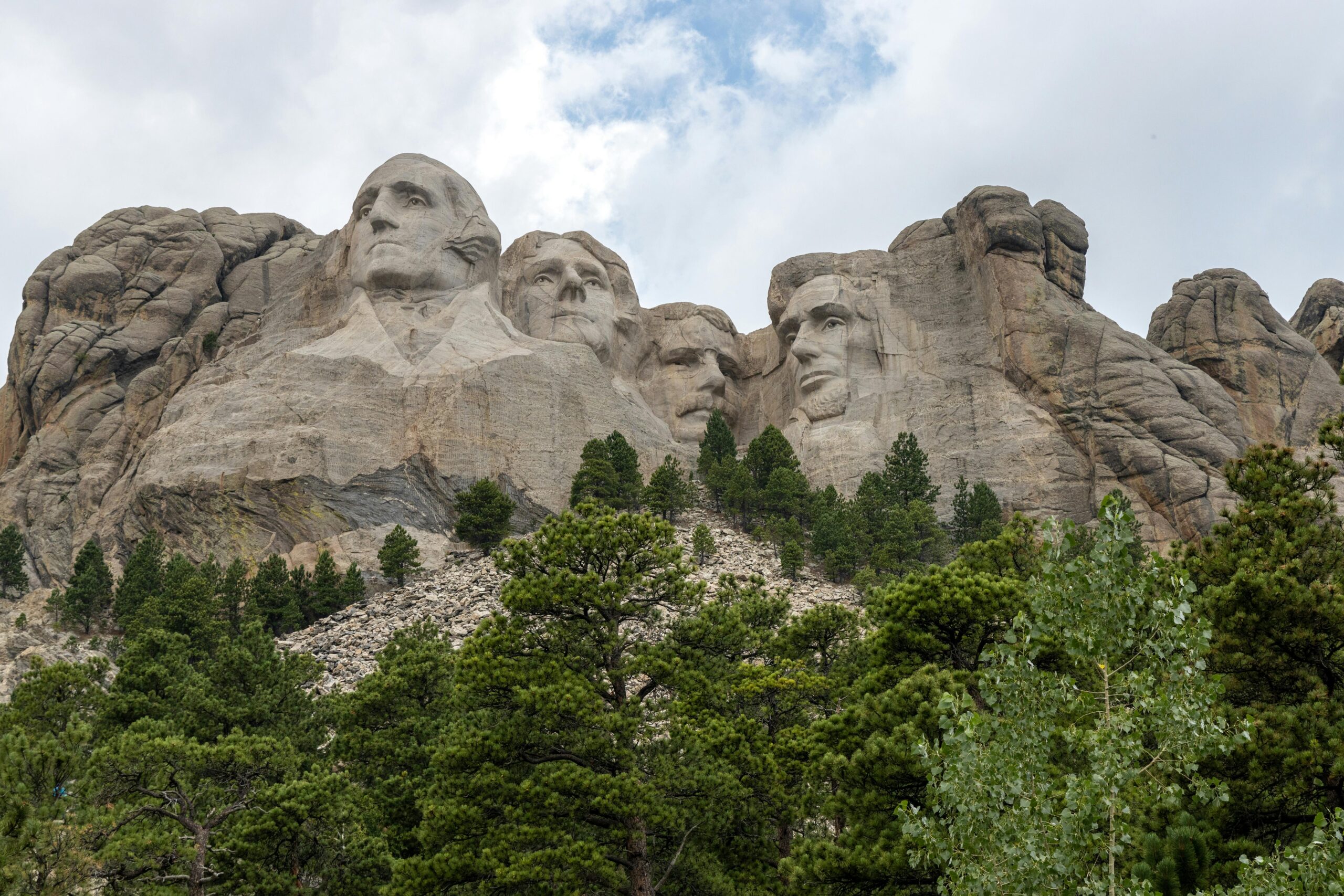
Who deserves a spot on the Mount Rushmore of US wine? Narrowing things down to four producers seems too restrictive, so I’ve created four categories instead. Sixteen faces would be a little crowded on a mountainside, but in a cellar there’s usually more room.
Chardonnay
I really tried to think of a Sauvignon Blanc that felt, well, monumental enough to include in this list. But in the end, it was all Chardonnays that came to mind. While each of our other quartets prioritizes regional diversity, I couldn’t help including two Sonoma Coast producers here, the inimitable Littorai and the lean, saline Chardonnays of Ceritas. Since several of their top Chardonnay sources are located high in the Santa Cruz Mountains, I’ll give myself a pass, despite their Healdsburg address. For a richer, distinctly Napa style, Kongsgaard always manages to balance outrageous opulence with a sense of poise and structure. And for the upstart fourth, Walter Scott has been going from strength to strength in Oregon’s Willamette Valley (look for a 2024 Chardonnay offer coming soon).
Pinot Noir
Two “faces” show up twice on our Mount Rushmores, and the first is Littorai. Sure, we could go with Jasmine Hirsch’s excellent Pinot Noirs as our Sonoma Coast choice – deserving wines, indeed. But it would be disingenuous. No California Pinot Noirs have given me as much pleasure over the years as well-aged bottles of Littorai, so their likeness will just have to be carved twice. Our second stop is farther south and inland at Josh Jensen’s Calera, one of California’s most important Pinot Noir producers, and the forerunner of many of today’s icons. Look for vintages before the sale to Duckhorn in 2017. For ocean breeze vineyards and lean fruit, you could head further south and west to Lompoc and Domaine de la Côte, but for my money it’s better to head northwest to Mendocino County’s Drew. Lastly, the undisputed tip-top Oregon Pinot Noir producer needs a seat at the table: The Eyrie Vineyards.
Cabernet Sauvignon (and Friends)
Ridge Monte Bello has to start any conversation about US Cabernet Sauvignon, and it also gives us something outside of Napa, from which the rest of our monumental Cabs must surely come. For valley-floor Cabernet, the pioneering and stalwart Cathy Corison is an easy choice. The Mayacamas and Vaca ranges frame the western and eastern edges of the valley and offer different styles of Cabernet that should both be represented here. Dunn Vineyards is the clear victor in the Vaca Mountains (Howell Mountain, more specifically), but the Mayacamas range is a toss-up between Diamond Creek and the aptly named Mayacamas, the latter of which I’m choosing due to a larger volume of recent tasting notes, not necessarily a clearly higher quality. Though it hasn’t yet risen to the level of the four just listed, honorable mention should be made of RdV Vineyards, now restyled as Lost Mountain Vineyards since Château Montrose acquired this Virginia icon in 2024.
The Best of the Rest
Reducing US wine production to Chardonnay, Pinot Noir, and Cabernet Sauvignon from only two states misses the wide range of styles on offer. Syrah is the primary focus of Cayuse in Washington’s Walla Walla Valley, but by no means the beginning and end of their story. Rhône varieties have also played an important role in California’s wine industry, and one of the “Rhône Rangers” merits inclusion. My favorite is the iconoclastic Bill Easton at Domaine de la Terre Rouge in the Sierra Foothills, who still makes some of the most underrated (and underpriced) wines in the country, released after long years in the winery’s own cellar. California’s old-vine treasure, Zinfandel, shouldn’t be forgotten either, which prompts a reprise of Ridge, despite a strong contender in Morgan Twain-Peterson’s Bedrock Wine Co. For their dedication to the cultivation of vines that supply most of the vineyards in the eastern half of the country more so than for their (still delicious) library Rieslings, New York’s Hermann J. Wiemer rounds out the list as only the second mention east of the Rockies.
The absence of certain names from this list is sure to raise some eyebrows: Mondavi’s history, Harlan’s current dominance, and the cult status of wines like Screaming Eagle make them serious contenders, along with dozens of others. But if I’m meant to hold true to the independent spirit of this country, I’ve got to stick to my guns and ignore the prevailing sentiment. Which wineries make up your Mount Rushmore of US wines? Drop us a line to let us know.