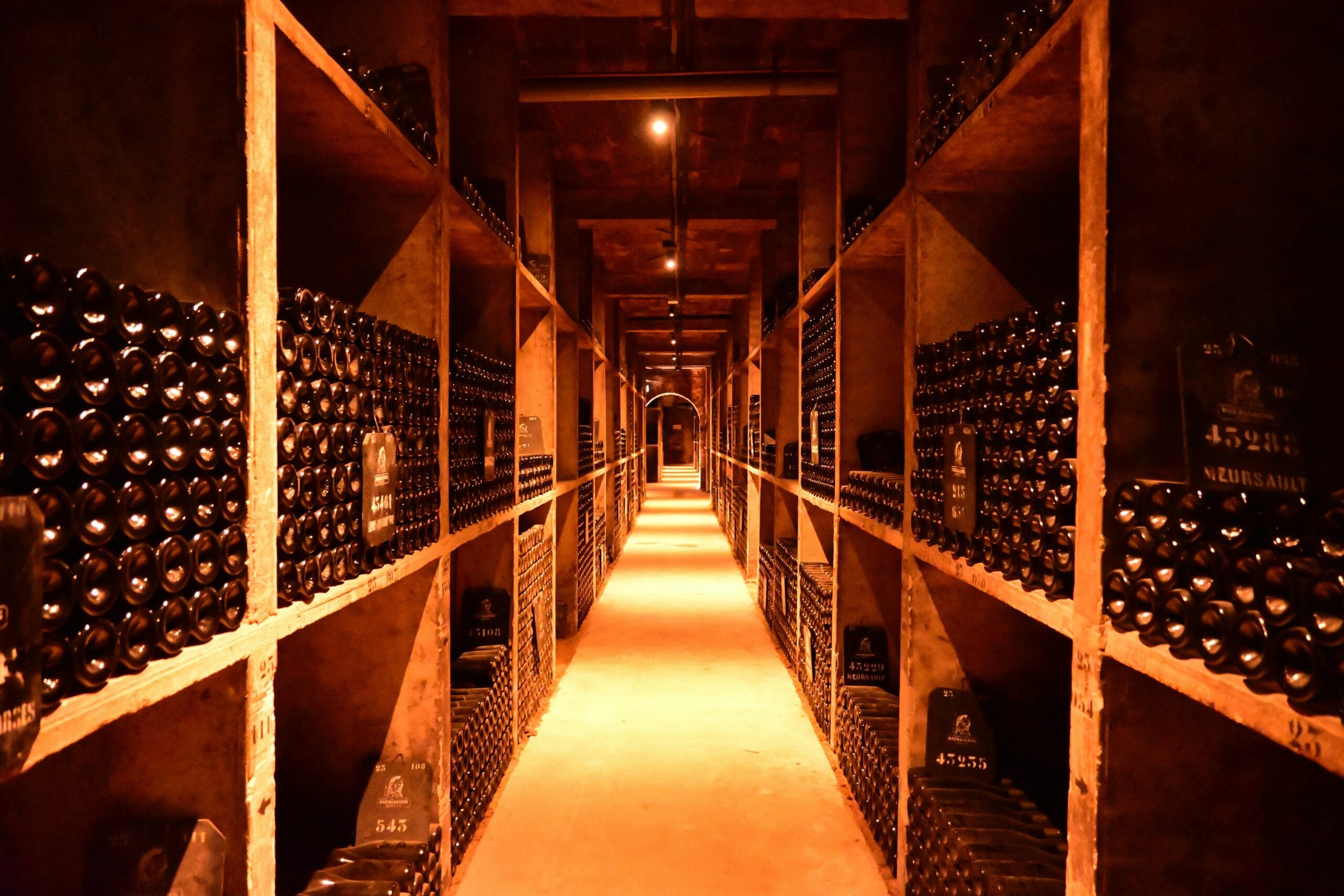
Pleasure and pain emanate from home wine cellars, and the goal of cellaring is to maximize the former and minimize the latter. While oceans of ink have been spilled (or pixels illuminated, perhaps) on the topic of which wines to buy, far less has been said about the underlying questions of cellaring. How should personal taste shape cellar selection? How should one balance immediate pleasure with long-term potential? How many oxidized bottles is too many? How should one think about aging different wine styles? What about the exceptions to the rules? All this and more below.
Surströmming and the Variety of Taste
Often cited as one of the most pungent foods in the world, surströmming (fermented Baltic herring from northern Sweden) is such an acquired taste that German food critic Wolfgang Fassbender wrote, “The biggest challenge when eating surströmming is to vomit only after the first bite, as opposed to before.” Wine, too, is an acquired taste, and aged wine even more so. It is not that the difference between the fruity richness of a young Ribera del Duero and the layered, almost medicinal complexity of 1953 Vega Sicilia Único is lost on the novice drinker, but rather that, to the uninitiated palate, the former tastes good and the latter tastes spoiled.
Wine enthusiasts tend to elevate an appreciation for tertiary development (the fancy term for the flavors a wine takes on after aging) and dismiss a preference for primary fruit. Questioning this hierarchy is the first step toward a successful home cellar. Some people like surströmming. Some people prefer tuna sashimi. Some people would trade either for a plate of fried catfish. If you’ve tried a good number of bottles and find you consistently prefer the taste of young Barolo to old Barolo, that doesn’t tell you that your palate is wrong. But it should tell you something about how to structure your cellar. After all, so many people like surströmming that there’s a whole festival devoted to it: surströmmingsskiva.
The Pain of Knowledge and Ignorance
This is a straightforward argument for drinking your wine a bit younger than you might otherwise want to: for most of us, the pain of knowledge is much greater than the pain of ignorance. Let’s say you finish your sixth and final bottle of 2014 Hubert Lamy Criots-Bâtard-Montrachet Grand Cru on a balmy night this week. It is a bit tight, sure, but it’s as layered and captivating as you could possibly ask, and it opens up over the course of the evening. The vintage’s acidity and the producer’s reductive style might cause you to lose a little bit of sleep in the coming weeks: “Did I open all of those bottles too early?” You’ll probably never know. But the pain of that ignorance probably won’t kill you. Overall, the experience will have been positive, and you’ll likely look to stock up on some of the more recent releases.
If, instead, you’re sitting on five out of six bottles of the same wine’s 1990 vintage, and you crack open bottle #2 on Saturday evening, you may find that oxygen has taken its toll and worry that the other four bottles you’ve been saving for decades will be equally disappointing. For most drinkers, the pain of this knowledge is far worse than opening your last bottle a bit too soon.
Acceptable Collateral Damage and Safety in Numbers
For those of us who still like to enjoy mature bottles, the resulting question is equally straightforward: How much collateral damage is acceptable? For some, perhaps the gamblers among us, that number may be high, while for others even a few losses may be intolerable. Understanding this simple truth about oneself makes the drinking windows published by major critics more actionable.
Once one’s risk threshold is set, there is safety in (reasonable) numbers. A single bottle of an untouchable treasure is often held past its prime, while a six-pack of a slightly more approachable wine can be tested over the years, ensuring maximum enjoyment.
The Unicorn Exception
Before getting into more specific guidance around common styles of wine, we must mention the Unicorn Exception. One unfortunate reality of the wine world is that, despite the general utility of stylistic drinking windows, there are always one or two producers that defy their region’s standards for longevity. This is a continuation of the only true rule in wine: every rule comes with an asterisk. Great dry Riesling (German GG, top Wachau examples, etc.) ages consistently for ten years. Unless it’s a GG from Keller, in which case it’s barely getting started at ten. Viognier like Condrieu should usually be consumed within three or four years of release, unless it’s Château-Grillet, in which case a decade is usually no problem. White Bordeaux typically ages unevenly past about five years, but Château Haut-Brion Blanc can go for decades. You get the picture. If you’re dealing with the grail producer of a given style, throw out the general guidance and look for more specific tasting notes on the wine in question. Better yet, if you have more than a bottle or two, keep your own records to dial things in to your particular taste.
How Long Should I Keep My _______?
Now that all the caveats have been covered, let’s get into some typical cellaring windows for a few common, classic styles, expressed as years after normal release. There are quite a few, so I’ll resist my usual tendency to qualify and elaborate. After each range, I’ll add (+x), indicating the additional years you might expect from top-quality producers. The Unicorn Exception still applies to a select few producers, for whom these ranges should be ignored entirely. These ranges apply to standard-size bottles. Large formats will extend the aging window, while small formats will shorten it.
Sparkling Wine
Non-traditional-method sparkling: 1-3 years (+2)
Entry-level Champagne / traditional-method sparkling: 3-5 years (+3)
Vintage / prestige cuvée Champagne: 5-10 years (+10)
Entry-level rosé Champagne / traditional-method rosé sparkling: 2-4 years (+2)
Vintage / prestige cuvée rosé Champagne: 5-8 years (+7)
White Wine
Riesling (dry): 1-5 years (+10)
Riesling (off-dry): 2-10 years (+15)
Riesling (sweet): 5-15 years (+25)
Sauvignon Blanc (unoaked): 1-4 years (+3)
Sauvignon Blanc (oaked): 2-5 years (+3)
Grüner Veltliner: 1-5 years (+7)
Chenin Blanc (dry): 1-8 years (+8)
Chenin Blanc (off-dry): 2-10 years (+10)
Chenin Blanc (sweet): 5-15 years (+15)
Chardonnay (unoaked): 1-5 years (+10)
Chardonnay (oaked): 3-10 years (+15)
Viognier: 1-5 years (+5)
Sémillon (Hunter Valley): 0-3 or 10-20 years (+10)
Unoaked non-aromatic varieties (e.g., Pinot Grigio, Vermentino): 1-3 years (+2)
Sauternes / Barsac: 10-25 years (+25)
Tokaji: 5-15 years (+25)
Extremely concentrated sweet wines (e.g., Tokaji Eszencia, TBA, PX Sherry): 25-100 years (+?)
Still Rosé
General Provençal style: 0-3 years (+2)
Bandol, Sancerre, etc.: 1-5 years (+3)
Red Wine
Gamay: 1-3 years (+2)
Cru Beaujolais: 2-5 years (+5)
Pinot Noir (Bourgogne equivalent): 2-5 years (+5)
Pinot Noir (village Burgundy equivalent): 3-10 years (+10)
Pinot Noir (1er Cru Burgundy equivalent): 5-15 years (+10)
Pinot Noir (Grand Cru Burgundy equivalent): 8-20 years (+15)
Etna Rosso: 3-10 years (+5)
Nebbiolo (Langhe, Alba, etc.): 2-10 years (+10)
Nebbiolo (Barolo, Barbaresco, Gattinara, Boca, etc.): 5-30 years (+20)
Sangiovese (Rosso di Montalcino, Chianti Classico, etc.): 3-10 years (+5)
Sangiovese (Brunello, CC Riserva, etc.): 5-15 years (+10)
Tempranillo (Toro, Castilla y León, etc.): 1-5 years (+5)
Tempranillo (Ribera del Duero, Rioja): 3-10 years (+15)
Syrah (Australia, USA, South Africa, Crozes-Hermitage): 3-10 years (+10)
Syrah (Côte-Rôtie, Hermitage): 5-20 years (+15)
Malbec: 1-5 years (+15)
Merlot (non-Bordeaux): 5-20 years (+10)
Cabernet Sauvignon (USA, Australia, Argentina, etc.): 5-20 years (+20)
Bordeaux (AOC, Supérieur): 2-8 years (+5)
Bordeaux (Cru Classé): 5-15 years (+10)
Bordeaux (top châteaux): 10-30 years (+30)